Balanced Breakfast
The Considered Morning Plate: Protein, Fats and the Active Man's Breakfast
Eleanor Whitfield
·
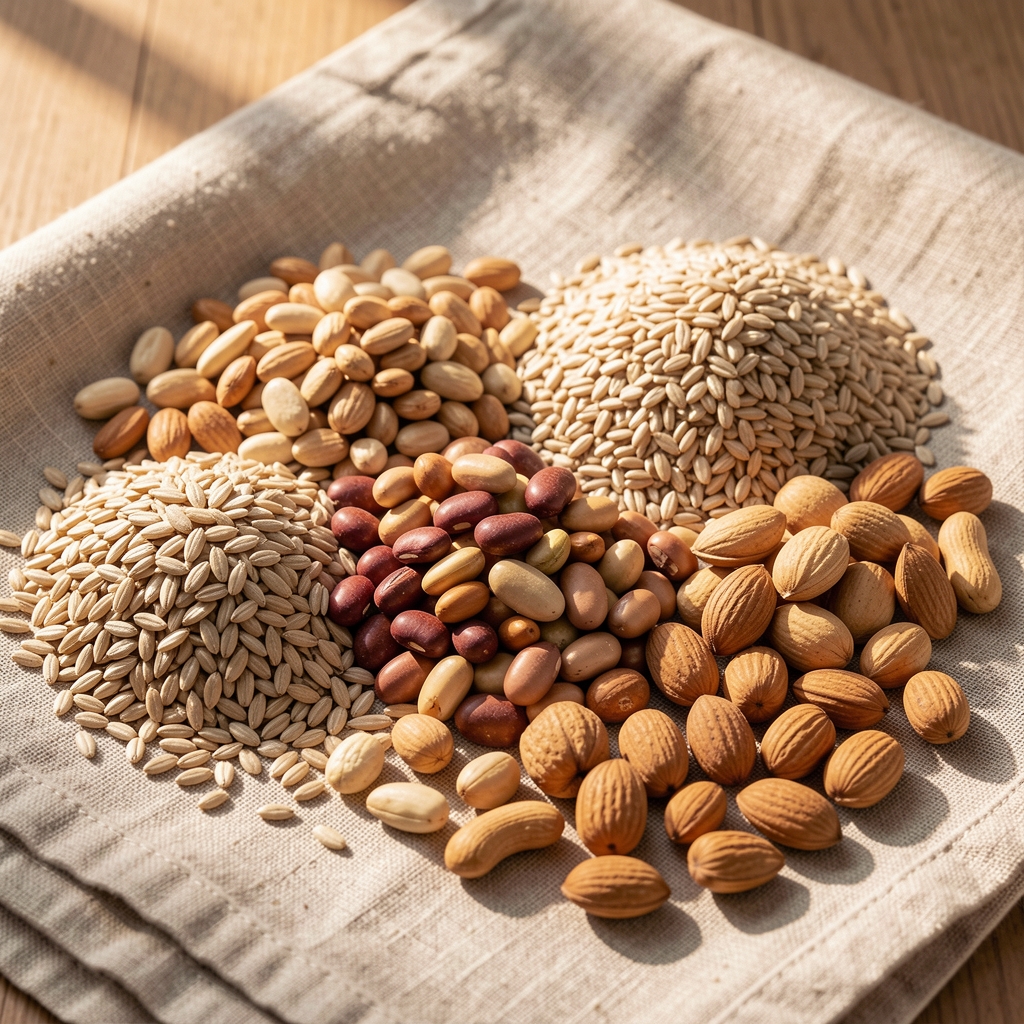
The relationship between fibre intake and sustained cognitive energy is not often framed as a practical daily concern. For men who spend the majority of their working hours at a desk, it is precisely that. The digestive system responds to the quality of carbohydrates consumed; whole grains offer a particular kind of regulated release that refined alternatives do not replicate.
A whole grain retains all three layers of the original kernel: the bran, the germ, and the endosperm. Refining removes the bran and germ, stripping away the fibre, B vitamins, iron, and magnesium that reside in those outer portions. What remains in a refined grain is largely starch — useful for rapid energy, but lacking the structural complexity that slows digestion and moderates blood glucose response.
Oats, rye, barley, buckwheat, brown rice, and spelt are among the grains commonly available in the United Kingdom that retain this full-kernel profile. Each has a distinct amino acid and mineral composition. Barley, for instance, contains particularly high levels of beta-glucan, a soluble fibre that contributes to the maintenance of normal cholesterol levels according to published dietary guidelines.
The practical implications for a desk-based working day are straightforward: a morning meal anchored by whole grains tends to produce a more stable mid-morning energy level than one built on white bread or processed cereals. The digestion is slower, the glucose release more gradual, the energy curve flatter and more sustained.
Dietary fibre serves as a substrate for the microorganisms that inhabit the large intestine. Fermentable fibres — those found in oats, legumes, and certain vegetables — are broken down by gut bacteria into short-chain fatty acids. These fatty acids contribute to the maintenance of the gut lining and play a role in the signalling pathways that influence mood, focus, and metabolic function.
For a man spending eight to ten hours seated, bowel transit time slows considerably compared to someone with a more physically active daily routine. Adequate fibre intake — commonly cited at a minimum of 30 grams per day in UK public health guidance — helps maintain regularity without editorial intervention. Whole grains contribute meaningfully to this target alongside vegetables and legumes.
The variety of fibre sources matters as much as the total quantity. A diet that relies on a single fibre source — say, a bran supplement added to an otherwise low-fibre pattern — provides less microbial diversity than one drawing from multiple whole food sources across meals.
"Variety of fibre sources matters as much as the total quantity. A diet drawing from multiple whole food sources provides more microbial diversity than one relying on a single supplement."
Astovela Review — Nutrition Notes, March 2026
Fibre intake without adequate hydration is counterproductive. Soluble fibre absorbs water as it moves through the digestive tract; without sufficient fluid, it can contribute to sluggish digestion rather than ease it. Daily hydration — the simple habit of reaching 1.5 to 2 litres of water over the course of a desk-based working day — functions as a prerequisite for fibre to perform its digestive role effectively.
Practical approach: a 500ml glass of water with breakfast, a second before lunch, a third at the desk during the early afternoon, and a fourth with the evening meal covers most adults' baseline needs without elaborate counting. Tea and coffee contribute to fluid intake but are not fully equivalent substitutes for plain water, particularly at higher caffeine intakes that have a mild diuretic effect.
The combination of a whole-grain breakfast, vegetables across meals, and consistent water intake throughout the working day creates a consistent baseline for digestive function. It is a pattern rather than a structured guideline — one that adjusts naturally to appetite, season, and the specific demands of the day.
A practical week-by-week rotation does not require elaborate meal planning. The principle is substitution rather than addition: replace white rice with brown rice or pearl barley; replace white toast with rye bread or seeded sourdough; replace processed breakfast cereals with steel-cut oats or whole-grain porridge. These are single-ingredient swaps that carry the full structural benefit of the whole grain without requiring new recipes.
Seasonally, the range of available whole grains in UK supermarkets and independent grocers shifts modestly. Autumn and winter lend themselves to porridge, barley soups, and rye bread. Spring and early summer bring lighter preparations — cold grain salads, spelt with herbs, buckwheat with roasted vegetables. Seasonal eating habits, applied to whole grains, reinforce variety without requiring deliberate planning.
Post-workout nutrition has its own grain considerations. The window following physical activity, where the body's capacity to store carbohydrate as glycogen is elevated, suits a moderate portion of easily digestible starch — brown rice or oats work well here alongside a lean protein source. The timing is less critical than it was once considered; consistency over the day matters more than the specific post-exercise hour.

Morning grain bowl — steel-cut oats with seasonal fruit. London, 2026.
Whole grains are not merely fibre vehicles. They contribute meaningfully to zinc and selenium intake, two minerals that appear with particular frequency in discussions of men's nutritional gaps in the UK. Zinc is concentrated in the germ layer of grains — the portion that refining removes. Whole wheat, oats, and rye therefore provide zinc in quantities that white equivalents do not.
Selenium content in UK-grown grains has historically been lower than in North American equivalents, owing to soil selenium levels. Brazil nuts, seafood, and eggs remain the most reliable dietary selenium sources in the British context, but whole grains contribute alongside these. A varied diet drawing from multiple whole food categories reaches adequate selenium intake without supplementation in most cases.
Zinc supports normal cognitive function and immune health; selenium contributes to the protection of cells from oxidative stress. Neither role requires elaborate supplementation when the dietary foundation — whole grains, vegetables, lean protein, healthy fats — is consistently in place. The grain contribution is partial but not negligible.

Alistair Marsden writes on nutrition, seasonal food, and the practical habits that underpin consistent energy and focus. His work draws on published dietary research and a long-standing interest in the intersection of food culture and everyday wellbeing.
More from this author →