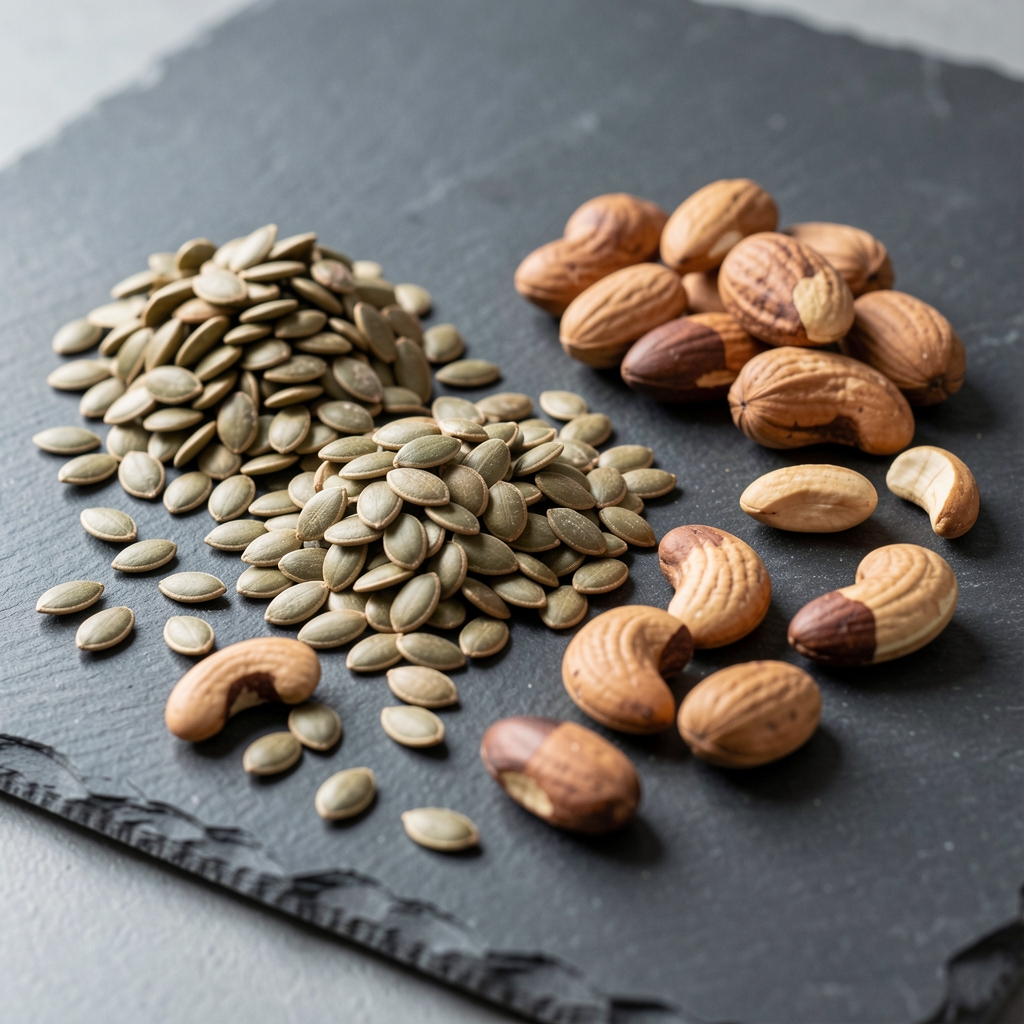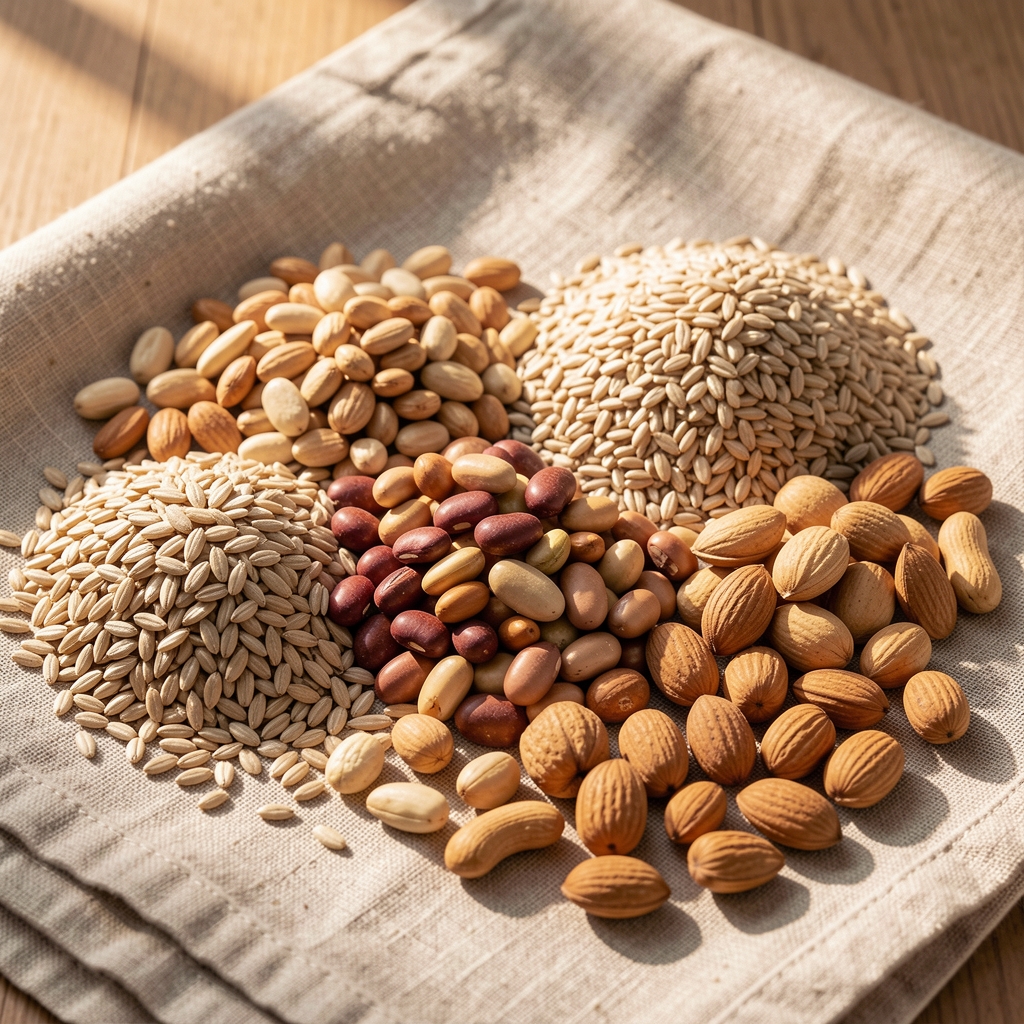
The morning meal occupies a particular position in men's nutritional practice. It is the first intake after a sustained period without food, the moment when the body's metabolic processes resume their daytime rhythm. How that plate is composed has a quiet but consistent influence on energy, appetite, and cognitive engagement across the hours that follow.
What whole grains actually contribute
Whole grains — oats, rye, spelt, barley, brown rice, and their various permutations — are distinguished from refined grains by the preservation of three structural components: the bran, the germ, and the endosperm. In refined grains, the bran and germ are removed during milling. What remains is predominantly starch, with most of the dietary fibre, the B vitamins, and the trace minerals residing in the discarded portions.
For men over 35, the distinction matters for several converging reasons. Dietary fibre — both soluble and insoluble — supports gut motility, moderates the rate at which glucose enters the bloodstream after eating, and contributes to a sustained sense of fullness that many men associate not with whole grains specifically but with the absence of mid-morning hunger.
Published dietary guidelines in the United Kingdom recommend a daily fibre intake of 30 grams for adults. The average actual intake sits closer to 18-20 grams — a gap that whole grains, incorporated consistently across meals, can meaningfully address. A single serving of rolled oats (approximately 80 grams dry weight) contributes around 8 grams of fibre. A slice of dense wholegrain rye bread contributes 3-4 grams. The accumulation across a considered daily eating pattern adds up with modest effort.
The slow-release principle and why it matters at breakfast
One of the most consistently observed properties of whole grain consumption is the moderation of postprandial blood glucose — the rise in blood sugar that follows a meal. Because the bran layer slows digestive access to the grain's starchy endosperm, the release of glucose into circulation happens more gradually than with refined equivalents.
For a man who works at a desk, or who exercises before or during his working day, this gradual release has practical implications. The characteristic mid-morning energy drop that many men navigate with a second coffee or a snack is, in part, a consequence of the rapid glucose spike and subsequent decline that follows a refined-carbohydrate breakfast. A bowl of steel-cut oats with some nuts and whole milk does not eliminate this phenomenon entirely, but it moderates it in a way that many men find meaningful over time.
This is not a claim about rapid transformation. The effect is cumulative and individual. But the research base supporting the glycaemic advantage of whole grains over refined grains at breakfast is among the more robust findings in nutritional science — partly because the mechanism is relatively straightforward and the effect is easily measured.
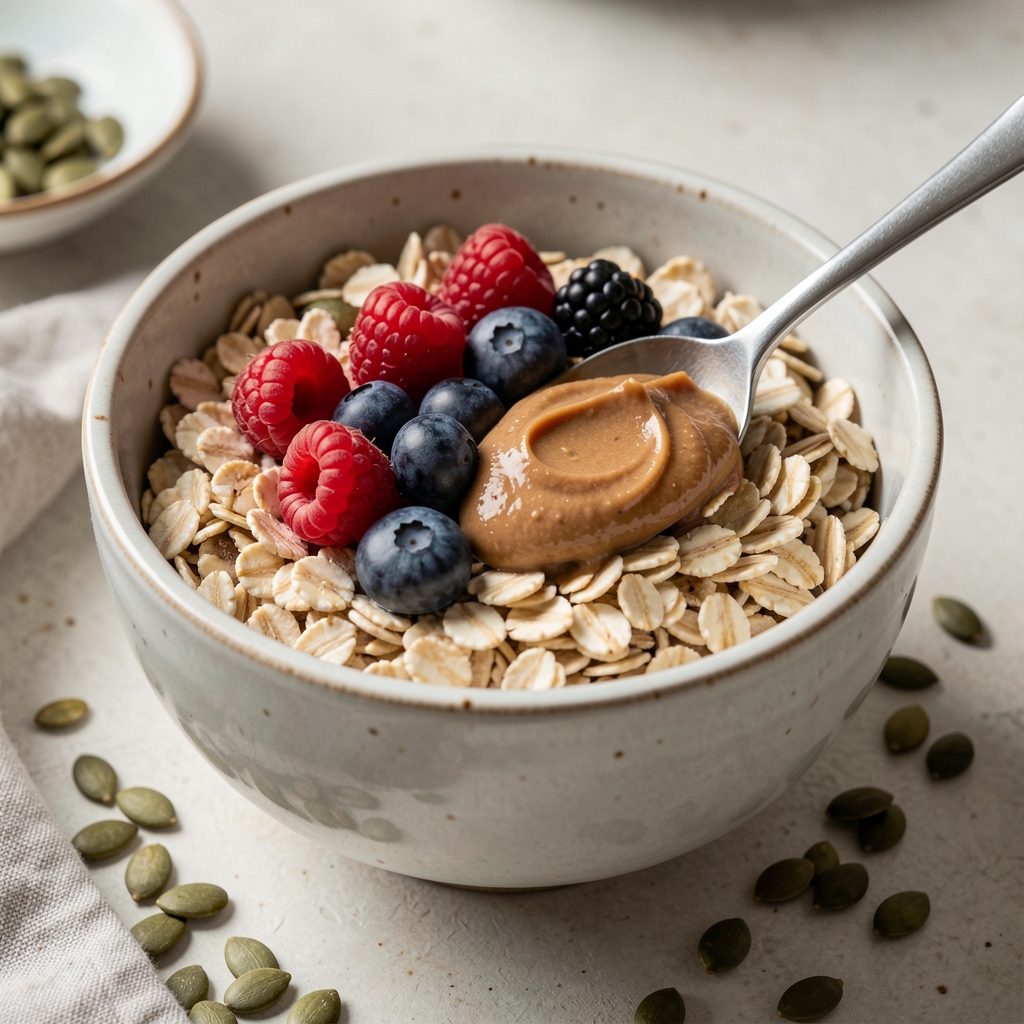
Steel-cut oats with mixed toppings — a practical whole grain breakfast composition
Constructing a practical whole grain breakfast
The challenge with whole grain breakfast recommendations is that they often assume unlimited morning time or a particular enthusiasm for kitchen preparation. For men with desk-based working lives, the breakfast window is frequently compressed. What follows is a set of compositions that are practical under time constraints while delivering meaningful fibre and nutrient density.
Overnight oats require approximately four minutes of preparation the evening before. A 70-gram portion of rolled oats combined with 200 millilitres of whole milk or a plant-based equivalent, left refrigerated overnight, requires no morning cooking at all. The texture softens; the digestibility improves. A handful of walnuts, some sliced apple or a small serving of frozen berries defrosted overnight, and the composition is both nutritionally substantive and genuinely quick.
For men who prefer a more savoury morning orientation, dense wholegrain bread with eggs and avocado is a well-established combination. Two slices of a high-fibre wholegrain loaf (not standard wholemeal, but a dense multi-grain variety) contribute 6-8 grams of fibre. Combined with the protein contribution of eggs and the monounsaturated fats in avocado, the plate addresses several nutritional functions simultaneously without requiring any particular nutritional sophistication from the person composing it.
"The morning plate is not the only meal that matters. But it is the first signal a man sends his body about the day's nutritional intentions."
Tobias Whitfield — Astovela Review
Fibre beyond the morning
Reaching the 30-gram daily fibre target through breakfast alone is not realistic for most men. A considered breakfast might contribute 10-12 grams on a good day. The remainder arrives through the rest of the day's eating — legumes, vegetables, further whole grain servings at lunch or dinner, and fruit consumed as snacks.
For men over 35, the role of dietary fibre extends beyond digestive comfort. Soluble fibre — found particularly in oats, legumes, and certain fruits — has a well-documented association with heart-healthy diet outcomes, specifically the moderation of LDL cholesterol. The mechanism involves the binding of bile acids in the gut, which prompts the liver to draw on circulating cholesterol to produce more. The effect is modest per serving but consistent across daily practice.
Insoluble fibre, found in wheat bran and the outer layers of most whole grains, supports gut motility — the regular movement of digestive contents through the intestinal tract. For men who sit for extended periods during working hours, maintaining this regularity through dietary means is a practical and low-effort contribution to gut-friendly foods and digestive comfort.
Hydration and the fibre relationship
An increase in dietary fibre intake without corresponding attention to daily hydration can produce the opposite of the intended effect. Fibre absorbs water during its passage through the digestive tract. If fluid intake is insufficient, the bulking properties of fibre that normally facilitate easy gut motility can instead contribute to sluggishness and discomfort.
The practical implication is simple: a man increasing his whole grain consumption should increase his water intake in parallel. The NHS guidance of 6-8 glasses of fluid daily (approximately 1.5-2 litres) represents a reasonable target, with the understanding that individual needs vary based on physical activity, ambient temperature, and other dietary factors.
Beginning the day with a large glass of water before or alongside breakfast is a habit that many men find easy to maintain precisely because it requires no additional grocery spending or preparation. It is, in a sense, the quietest element of the balanced breakfast for active lifestyle — and one of the most consistently effective.
- — Whole grains preserve bran and germ; the fibre, B vitamins, and trace minerals that refined milling discards remain intact and available.
- — The slow-release glucose profile of whole grains moderates the postprandial energy cycle that many desk workers associate with mid-morning fatigue.
- — Overnight oats and dense wholegrain bread are practical formats for men with limited morning preparation time.
- — Soluble fibre from oats and legumes has consistent association with heart-healthy diet outcomes through the LDL cholesterol pathway.
- — Increased fibre intake requires corresponding attention to daily hydration to function as intended.